Most founders choose their first office as a mirror of the present. Headcount today. Work patterns today. Constraints today. The problem is that early stage companies rarely stay where they are for long.
Space has a longer memory than teams do. Once chosen, it starts shaping behaviour immediately. It reinforces habits, rewards certain ways of working, and quietly discourages others. This is why offices that fit the current moment too perfectly often feel limited just months later.
The better question is not what do we need right now. It is who we are becoming, and how space should support that direction.
Designing for the culture you are trying to create
Culture is not something you add later. It forms through repeated behaviour. Space plays a role in deciding which behaviours become default.
If you want openness, do people actually see each other's work? If you want collaboration, are there places where conversation can happen without booking or permission. If you want to learn, is there room to gather without an agenda?
Designing for future culture means being honest about what is missing today. It means creating conditions that encourage the behaviour you want to see more of, even if it feels aspirational at first.
Spaces that only reflect current habits tend to lock them in. Spaces that hint at what is possible invite teams to grow into them.
How space shapes team dynamics and behaviour
Teams respond quickly to their environment. If private rooms are scarce, people avoid difficult conversations. If shared areas feel exposed, collaboration moves online even when people are together. If leadership sits apart, hierarchy becomes physical.
These patterns are not about intent. They are about ease.
People do what feels simplest in a space. Over time, those choices shape trust, speed, and how safe it feels to speak openly. Founders often try to correct these issues through process or values, when the environment is doing the opposite work.
When space aligns with the dynamics you want, leadership effort decreases. The room does some of the work for you.
Hybrid and in person without guessing wrong
Hybrid work complicates space decisions because presence is no longer constant. Many founders over-correct. Either they take too much space out of fear of being empty, or too little space and create pressure on the days everyone shows up.
The question is not how many desks you need. It is what happens when people are together.
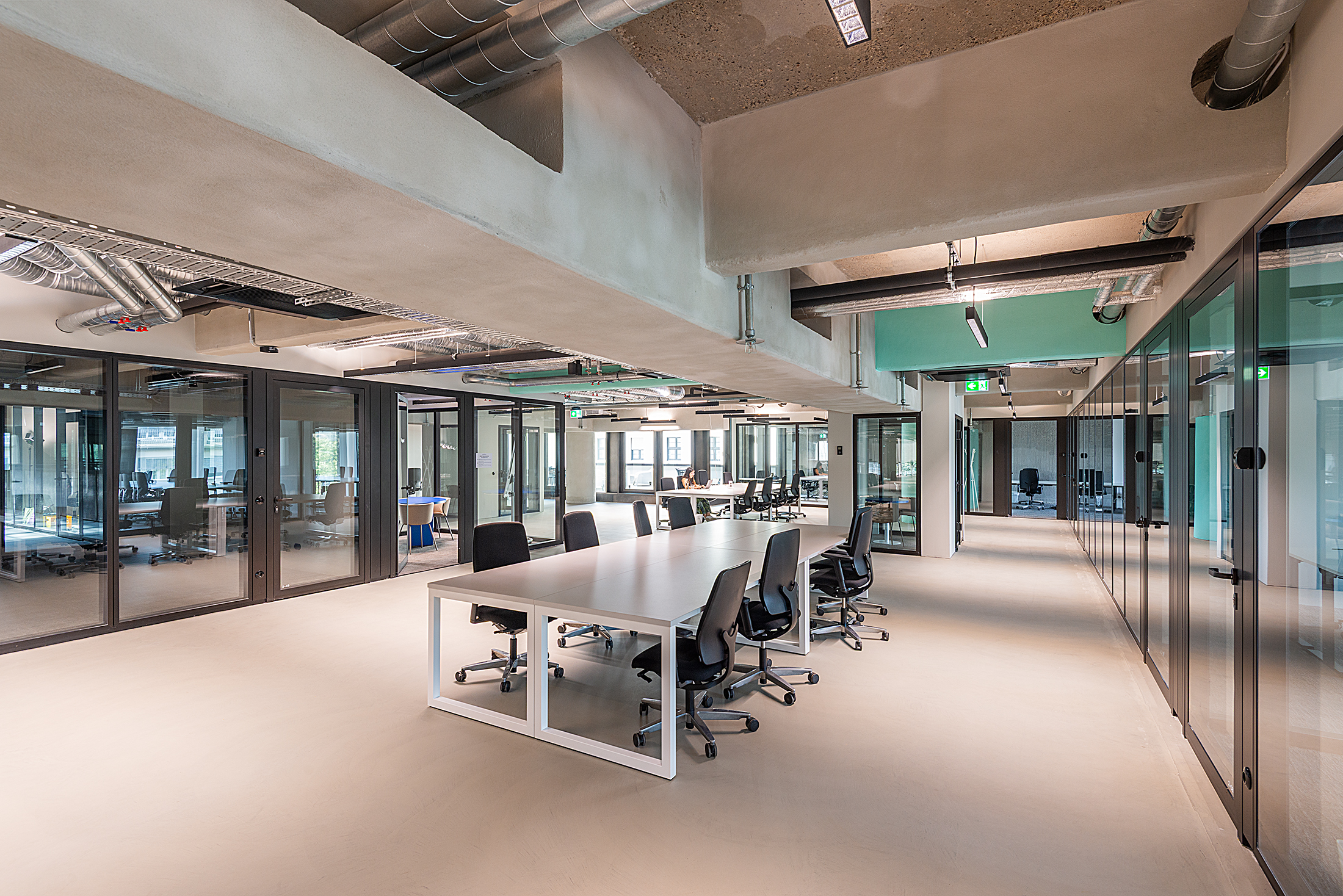
If in person time is for collaboration, learning, and decision making, space should support gathering more than individual work. Fewer fixed desks. More flexible areas. Rooms that adapt to group size and purpose.
A good office supports intensity without requiring constant presence. It respects autonomy while making time count together.
Why unplanned collisions matter more than schedules
Some of the most important moments in early companies are unplanned. A conversation overheard. A question asked in passing. A problem shared before it becomes serious.
These moments do not happen in calendars. They happen in corridors, kitchens, shared tables, and transitions between meetings.
Offices designed only for efficiency often remove these spaces. Everything becomes booked, segmented, and intentional. Over time, teams lose the informal layer where learning and trust build naturally.
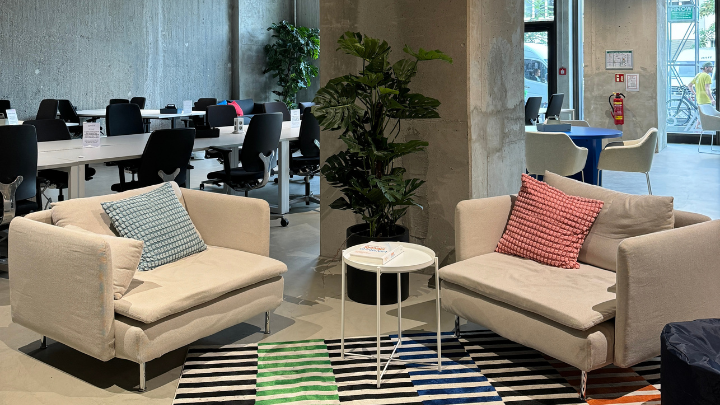
At The Delta Campus, we see how spaces that encourage overlap create stronger early teams. When people cross paths easily, knowledge moves faster. Relationships deepen. Culture becomes something lived, not enforced.
Choosing an office is not about predicting the future perfectly. It is about leaving room for it. Space should support who you are becoming, not just who you are today.
If you are thinking about how your next office can better reflect the culture you want to build, book a tour now or contact us for more information.
Written by Tsveta Stoeva
Head of Growth